Give Your Brand a Voice: Working with Birchside
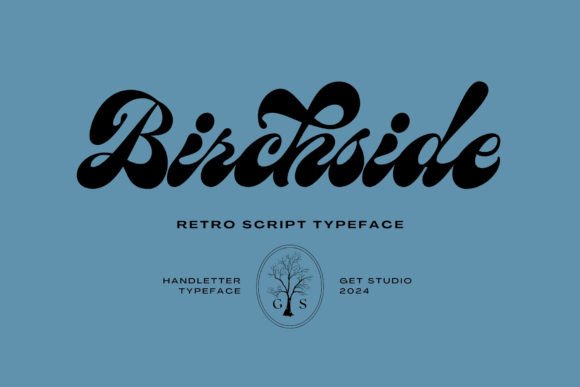
If you’ve ever struggled to find a typeface that feels both nostalgic and current, you aren’t alone. We often find ourselves torn between the elegance of vintage lettering and the punch required by modern digital platforms. That specific friction is exactly why we designed Birchside. It isn’t just another display font added to a crowded library; it is a calculated blend of retro charm and contemporary boldness. As a display script font, it captures the energy of hand-lettered signage while maintaining the structural integrity needed for professional brand identity work.
The first thing you notice about Birchside is its weight. This is a premium font that refuses to whisper. The strokes are thick and confident, designed to fill a space without looking cluttered. It draws inspiration from the mid-century aesthetic—think vintage travel posters or classic diner menus—but updates those curves for the modern eye. It avoids the common pitfall of many script fonts, which can often look too thin or whimsical to be taken seriously in corporate settings. Birchside, by contrast, commands attention. It is a creative font built for headlines, logos, and hero text where you need to make an immediate impact.
The Anatomy of a Statement Typeface
When evaluating a typeface for a project, I always look at how it handles negative space. With Birchside, the spacing is optimized to allow those bold strokes to breathe. It feels airy despite its heavy visual weight. This balance is crucial for readability. A script font can be beautiful, but if the letters merge into a blob, the message gets lost. Birchside maintains distinct letterforms that flow naturally into one another, creating a rhythm that guides the reader’s eye smoothly across the line.
One of the most practical features of this font is its versatility through OpenType features. If you use software like Adobe Illustrator or Photoshop, you have access to a suite of alternate characters. This means you can swap out specific letters to change the look of a word instantly. For example, if you are designing a logo design and two letters look too similar or create an awkward collision, you can simply toggle an alternate glyph to fix it. This level of customization is usually reserved for high-end custom lettering, but Birchside brings that capability to standard desktop use. It allows you to add a layer of individuality to your design assets that generic fonts simply cannot offer.
Practical Applications: From Packaging to Pixels
So, where does Birchside actually work best? The short answer is anywhere you need to establish a human connection. Because it mimics the irregularity of handwritten font styles while remaining legible, it is perfect for packaging design. Imagine this font on a craft coffee bag or a boutique candle label. It instantly communicates that the product is artisanal and made with care. It bridges the gap between a rustic aesthetic and a high-end retail price point.
For web design and social media graphics, Birchside serves as a powerful anchor. In a digital landscape dominated by clean sans serif fonts and minimalist layouts, a bold script font breaks the monotony. Use it for the main headline on a landing page or as the title text on Instagram stories. It grabs the scroll-happy user’s attention because it looks different from the standard "web-safe" typography we see every day.
However, context matters. You wouldn't want to use Birchside for long-form body copy. As a display font, it is optimized for short bursts of high-impact text. Think of it as the lead singer of a band; it needs a solid rhythm section behind it to shine. That rhythm section usually comes in the form of a neutral serif font or a clean sans serif font for the supporting text.
Strategic Font Pairing and Visual Hierarchy
Creating a strong visual hierarchy is about contrast. Since Birchside is expressive and textured, it pairs beautifully with typefaces that are geometric and restrained. If you are working on editorial design or a magazine layout, try pairing Birchside with a sans serif like Futura or Montserrat. The sharp, clean lines of the sans serif will provide a modern counterpoint to Birchside’s retro curves, creating a layout that feels dynamic and professional.
Color also plays a significant role in how this font performs. Because the strokes are bold, Birchside handles solid colors exceptionally well. It looks stunning in white text over a dark background, or in a deep navy against cream paper. When using it for brand identity materials, ensure there is enough contrast to let the unique details of the letterforms shine through. Avoid placing it over busy photographs unless you apply a background overlay to separate the text from the image noise.
Evaluating Fit and Licensing for Commercial Use
Before integrating any new font into your workflow, it is vital to check the licensing. Birchside is a commercial font, meaning it is designed for professional use. Whether you are a freelance designer creating assets for a client, or a small business owner designing your own merchandise, you need to ensure your license covers the intended use. This typically includes digital use for websites and apps, as well as print use for merchandise and physical marketing materials.
Here is a practical checklist for evaluating if Birchside fits your current project:
- Check the Tone: Does your brand voice lean toward friendly, vintage, or bold? Birchside fits these perfectly. It may not suit ultra-minimalist or strictly corporate legal firms.
- Test the Pairs: Before committing, mock up a headline with Birchside and a paragraph with your chosen body font. Do they compete for attention or complement each other?
- Review the Glyphs: Check the character map to see the alternates. If you are designing a logo, these extras are invaluable for customization.
- Size Check: Zoom out. Does the font remain legible at the size you intend to use it? For print, ensure the ink traps don't bleed together on your specific paper stock.
Ultimately, choosing a typeface like Birchside is about choosing a personality. It is for the entrepreneur who wants to stand out in a crowded market, or the designer looking to inject some warmth into a cold digital interface. It combines the nostalgia of the past with the boldness of the future, making it a versatile addition to any creative toolkit. When you use Birchside, you aren't just setting type; you are setting a mood that resonates with your audience.