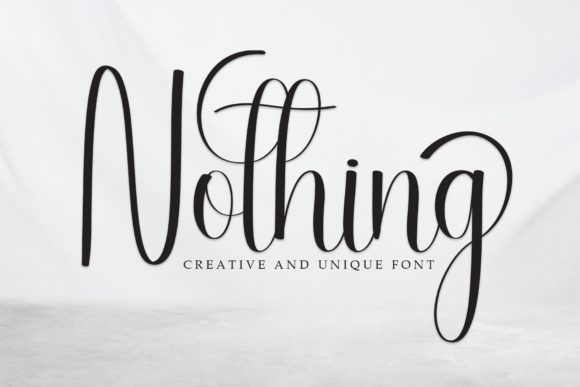
Nothing: The Display Font That Commands Attention
In a world saturated with visual noise, the most powerful statement can sometimes be made with Nothing. This isn't about absence, but about a bold, confident presence. As a premium display font, Nothing is engineered to cut through the clutter, offering designers and creators a tool built for impact. It’s a modern typeface with a distinct personality, blending sharp, geometric lines with subtle, humanist touches. This creates a visual style that feels both contemporary and timeless, making it far more than just another creative font—it’s a strategic asset for any project requiring a strong voice.
Nothing’s appeal lies in its versatility and character. It’s not a delicate script font or a neutral sans serif font. Instead, it occupies a powerful middle ground, with the weight and presence of a serif font but the clean, modern geometry of a sans. The letterforms are carefully crafted with a consistent, sturdy stem and deliberate, elegant curves. This gives it an air of professionalism and reliability, while its slightly condensed proportions add a touch of dynamism. Whether set in all caps for maximum impact or used in a more nuanced mixed-case setting, Nothing maintains its clarity and strength. It’s the kind of typeface that feels at home on a luxury product label, a tech startup’s homepage, or the cover of a cutting-edge magazine.
Where Nothing Truly Shines: Real-World Applications
The true test of any design asset is its performance in the field. Nothing excels as a cornerstone of brand identity. For logo design, its distinctive character helps create a mark that is instantly recognizable and memorable. A coffee roaster, a boutique agency, or a fitness brand could all use Nothing to convey a sense of grounded, modern authority. In packaging design, it ensures product names and key messages are legible from a distance on crowded shelves, while its refined details reward closer inspection.
In the digital realm, Nothing proves its worth in web design and social media graphics. As a heading font, it establishes a clear visual hierarchy, guiding the user’s eye and making content scannable. Its robust construction ensures it renders crisply on screens of all sizes, from desktop monitors to mobile phones. For social media, where you have mere seconds to capture attention, a post or story set in Nothing stands out in a feed. It’s equally effective for editorial design, lending a confident voice to magazine headlines, book titles, and report covers. The font’s personality can be adapted—pair it with a clean, geometric sans serif font for a tech-forward feel, or contrast it with a elegant serif font for a more luxurious, editorial look.
Unlocking Potential: The PUA Encoding Advantage
A critical feature that sets Nothing apart is its Encoded PUA (Private Use Area) Character set. For the uninitiated, this is a game-changer. In simple terms, PUA encoding means that every single glyph, alternate character, and stylistic option within the font is directly accessible without needing advanced design software like Adobe Illustrator or Photoshop. You can use these special characters in standard applications that support basic font features, such as Microsoft Word, PowerPoint, Canva, or even your website’s CMS.
This practical feature democratizes professional design. A small business owner creating their own menu, a blogger designing a media kit, or a crafter making wedding invitations can now access the full suite of stylistic alternates and ligatures that give Nothing its unique flair. It removes a technical barrier, allowing for greater creativity and consistency across all projects. You can easily swap out a standard ‘A’ for a more decorative version or use special ligatures to connect letters in a logo, all within the tools you already use daily. This makes Nothing not just a creative font, but an exceptionally usable one.
Making the Right Choice: A Practical Guide
Choosing a font like Nothing is a strategic decision. Start by evaluating your project’s needs. Does it require a bold statement? Nothing is ideal for headlines, logos, and display text where impact is paramount. It is less suited for long-form body copy, where a more neutral and highly legible typeface would be appropriate. Always test the font in context. Mock up your logo, a social media post, or a webpage header to see how its personality aligns with your brand’s voice.
Don’t overlook the importance of font pairing. Nothing’s strong character means it works best with a complementary, more subdued partner. Consider pairing it with a simple sans serif font for body text to create a balanced and professional layout. Review all the included styles and weights. A well-designed font family often includes regular, bold, and italic variations, giving you tools to create emphasis and hierarchy. Finally, for any commercial use, ensure you have the correct license. A proper commercial font license protects both you and the font designer, granting you the legal right to use the typeface in your logos, products, and marketing materials. Investing in a premium font like Nothing is an investment in the quality and cohesion of your visual communication.