Summer Wave Line Art: Playful Dingbats for Creative Projects
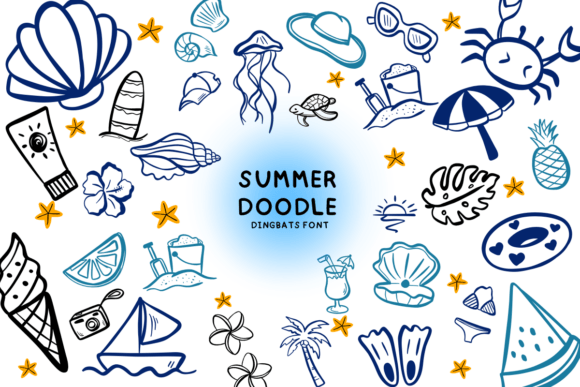
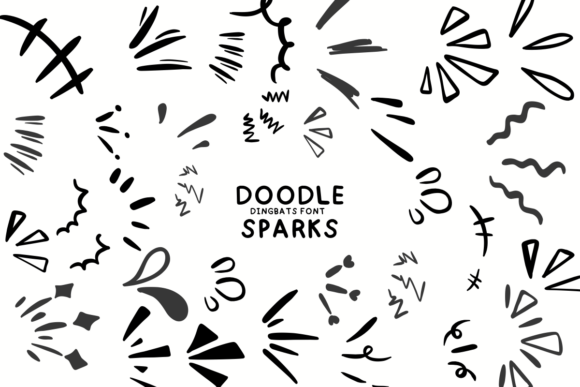
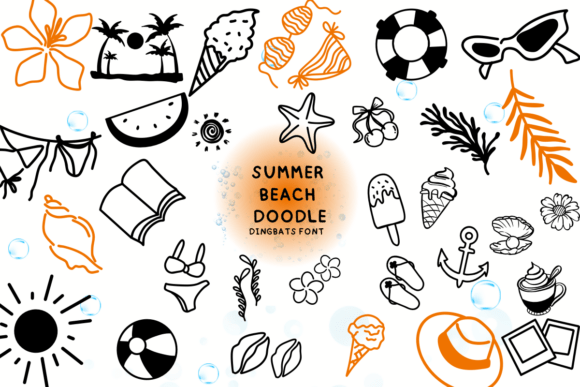
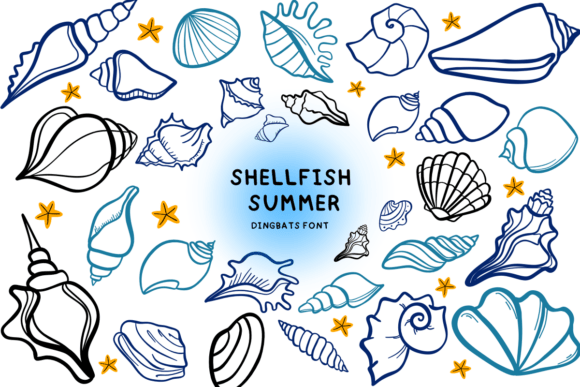
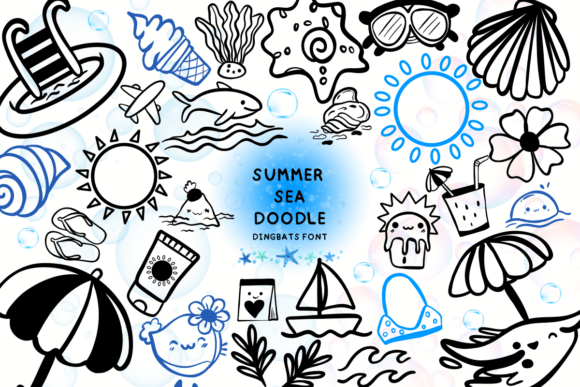
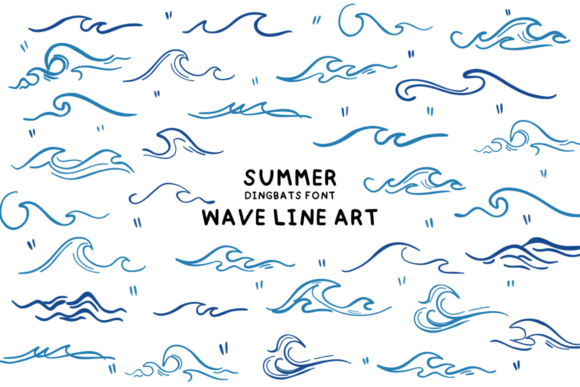
When you first encounter Summer Wave Line Art, it doesn't behave like a typical typeface. You won't use it to write paragraphs or even headlines in the traditional sense. Instead, think of it as a curated collection of visual shorthand—a series of hand-drawn, continuous line illustrations that capture the easy, flowing energy of the season. Each character you type translates into a distinct piece of clip art: rolling waves, sun motifs, botanicals, and whimsical sea creatures, all rendered in a single, confident stroke. It’s a creative font designed not for reading, but for decoration and visual storytelling.
Understanding the Aesthetic: More Than Just Clip Art
The personality of Summer Wave Line Art is defined by its simplicity. The illustrations are minimalist yet expressive, avoiding intricate detail in favor of a clean, modern silhouette. This style makes it incredibly versatile. It doesn’t compete with complex patterns or busy backgrounds; instead, it complements them. The consistent line weight throughout the character set ensures that no matter which symbols you combine, they will feel cohesive. This is a significant advantage over mixing disparate clip art sources, where variations in line thickness and style can make a design look disjointed.
As a display font of a different kind, its appeal lies in its ability to inject personality without overwhelming the viewer. It sits comfortably alongside both serif font and sans serif font choices, offering a textural counterpoint to clean, structured typography. The visual characteristics evoke a sense of handcrafted quality, reminiscent of a sketch in a traveler’s journal or a quick doodle on a coffee shop napkin. This authenticity is a valuable asset in an era where audiences crave genuine, human-centric design.
Strategic Applications for Designers and Brands
The true strength of a premium font like Summer Wave Line Art is its range. For graphic designers, it’s a powerful tool for adding instant thematic flair. Consider its role in logo design for a coastal café, a surf shop, or a summer festival. The icons can be scaled, colored, and integrated into a logomark to create a recognizable symbol that communicates the brand’s essence at a glance.
In editorial design and publishing, it solves the problem of visual monotony. A blog post about travel tips or a magazine feature on wellness can use the icons as section dividers, pull-quote embellishments, or as a subtle background pattern. This enhances the reader’s experience, breaking up long blocks of text and reinforcing the article’s theme in a visually engaging way. For packaging design, the illustrations can adorn product boxes, hang tags, or labels for items like artisanal soaps, specialty teas, or summer apparel, lending them a bespoke, curated feel.
From Digital Platforms to Physical Products
The digital realm is a natural home for this creative font. It excels in web design and social media graphics. Imagine using a wave icon as a custom bullet point on a website or incorporating a sun symbol into an Instagram story template. These small touches make digital content feel more polished and intentional. The font’s simplicity ensures it remains crisp and legible even at smaller sizes on mobile screens, a critical consideration for modern web design.
Equally compelling are its applications in print and merchandise. For entrepreneurs and small business owners, Summer Wave Line Art is a gateway to creating compelling product lines without commissioning custom illustration for every item. It’s perfect for:
- Stationery and Invitations: Design elegant, themed wedding suites or playful greeting cards.
- Apparel and Accessories: Create trendy designs for t-shirts, tote bags, and hats.
- Home Decor: Develop patterns for throw pillows, art prints, or custom mugs.
The line art style translates beautifully to single-color printing methods like screen printing or foil stamping, making it a practical choice for commercial production.
Practical Integration and Best Practices
Working with a dingbat font requires a slightly different approach than working with text fonts. Here’s how to get the most out of it:
Evaluating Project Fit: First, ensure the playful, whimsical tone aligns with your project’s goals. It’s ideal for brands targeting a relaxed, youthful, or creative audience. For a corporate law firm or a financial institution, it would likely feel out of place. Context is everything.
Font Pairing is Key: The icons are the stars, so your supporting typography should play a complementary role. A clean, geometric sans serif font like Montserrat or Lato provides a modern, stable foundation. For a more organic, rustic feel, pair it with a sturdy serif font. Avoid pairing it with another highly decorative or script font, as this can create visual clutter.
Readability and Hierarchy: Use the icons as accents, not as replacements for essential text. They work best when they enhance a message, not when they become the message itself. Use them to draw attention to a call-to-action, highlight a key feature, or simply add a decorative border. Their role is to guide the eye, not to force the reader to decipher code.
Check Your License: As with any commercial font, always review the licensing terms. Most premium fonts require an extended license for use on physical products for sale (like mugs or t-shirts) versus digital-only applications. Understanding this upfront prevents legal headaches down the line.
Ultimately, Summer Wave Line Art is more than a collection of symbols; it’s a design asset that encourages experimentation. It invites you to think visually, to break the monotony of standard layouts, and to infuse your projects with a consistent, charming personality. Whether you’re building a brand identity for a new venture or adding polish to a personal creative project, it offers a straightforward way to elevate your visual language and connect with your audience on a more human level.