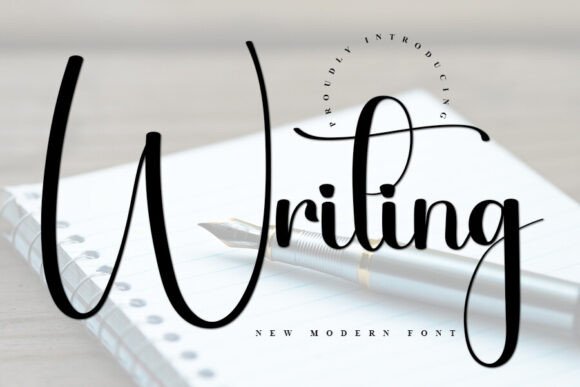
Writing This: A Typeface for Modern Storytellers
There’s a particular kind of design challenge every creative faces: finding a typeface that feels both fresh and familiar, elegant yet approachable. It needs to stand out without shouting, and it must carry a message with personality rather than just style. Writing This enters that space with a distinct character. It’s not just another premium font; it’s a carefully crafted tool for creators who want their work to communicate with clarity and charm.
Understanding the Visual Personality of Writing This
At its core, Writing This is a display font with a strong sense of rhythm and flow. Its letterforms balance between the structured elegance of a modern serif font and the organic warmth of a script font. You’ll notice subtle curves and confident strokes that give it a vibrant, almost handwritten quality, yet it maintains the legibility needed for professional applications. It’s this duality—simplicity meeting originality—that makes it so versatile. It doesn’t feel overly decorative or sterile; instead, it brings a breath of fresh air to any layout.
The font’s personality leans toward being helpful and creative. It’s the kind of typeface that can make a logo design feel instantly more inviting or give social media graphics a personal touch that stands out in a crowded feed. Its overall appeal lies in its ability to feel both contemporary and timeless, avoiding fleeting trends in favor of a style that ages well.
Where Writing This Truly Shines: Practical Applications
Choosing the right font often comes down to context. Writing This proves its value across a surprisingly wide range of projects, particularly where human connection and clarity are key.
- Branding and Identity: For logo design and brand identity systems, it offers a unique voice. It can serve as a primary logotype for boutique brands, lifestyle blogs, or artisanal products, instantly setting a tone of authenticity and care. Paired with a clean sans serif font for body text, it creates a beautiful and functional hierarchy.
- Marketing and Digital Presence: This is where Writing This excels in web design, packaging design, and social media graphics. Its readability at medium sizes makes it perfect for YouTube banners, Instagram stories, and Facebook ads. It helps content feel more personal and engaging, which can boost audience connection and click-through rates.
- Publishing and Editorial Design: Think beyond standard body copy. In editorial design, this font can be a star for pull quotes, chapter headings in a cookbook, or title treatments for a lifestyle magazine. It adds a layer of sophistication and warmth that draws the reader in.
- Print and Craft: The font’s elegance translates beautifully to physical items. It’s an excellent choice for wedding invitations, greeting cards, and event programs. For small business owners, it elevates design assets like product tags, thank-you notes, and loyalty cards, reflecting a commitment to quality that customers notice.
Making the Most of Your Font Choice: A Practical Guide
Integrating a new creative font into your toolkit is about more than just downloading a file. To get the best out of Writing This, consider these practical steps.
First, evaluate the project fit. Is the goal to convey warmth, professionalism, creativity, or all three? Writing This works best when you want to add a human element. It might not be the best choice for a highly technical whitepaper, but it’s perfect for a bakery’s menu or a consultant’s case study cover.
Second, test font pairings. A strong pairing is the backbone of good typographic hierarchy. Try combining Writing This with a neutral sans serif font like Montserrat or Open Sans for body text. This allows the display font to capture attention while the supporting type ensures easy reading for longer passages.
Third, review the included styles. A quality commercial font often comes with more than the standard weight. Look for italics, alternate characters, or stylistic sets. These options can give you more creative control and help maintain consistency across a large project.
Finally, always consider readability and licensing. Test your layouts at the intended size—what looks good on a large banner might lose detail on a small ID card. And ensure you have the correct commercial license for your intended use, whether for a client project, merchandise, or digital products. This protects your work and supports the font’s creators.
A Final Thought on Creative Growth
Investing in a versatile typeface like Writing This is an investment in your creative output. It’s more than a visual asset; it’s a tool that can help define your style, streamline your workflow, and present your ideas with greater impact. In a landscape where first impressions are visual, having a font that speaks your brand’s language clearly and beautifully is a genuine advantage. It’s about building a foundation for work that not only looks good but also feels right to the people you’re trying to reach.