Providence: A Modern Sans Serif for Timeless Design
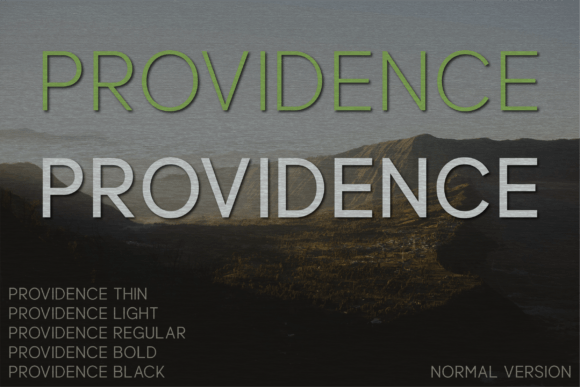
When you first encounter the Providence font family, there's a quiet confidence in its letterforms. It doesn't shout for attention with excessive quirks or trendy details. Instead, it speaks with a refined clarity that feels both contemporary and enduring. This is a sans serif font designed for projects where sophistication and readability are non-negotiable. The family includes five distinct weights, offering a versatile range from delicate light versions to commanding bolds, each sculpted with the same precision and care.
The Character of Providence: More Than Just Clean Lines
Providence embodies a specific kind of modern elegance. Its characters feature a balanced geometric structure softened by subtle humanist touches. The terminals are clean but not overly sharp, the x-height is generous for excellent readability, and the spacing is meticulously calibrated. This isn't a cold, sterile typeface; it has personality. You'll notice this in the distinctive lowercase 'a' and 'g', or the graceful curve of the uppercase 'Q'. This blend of precision and subtle warmth makes it a premium font that avoids the pitfalls of feeling generic or overly clinical.
Its personality is versatile yet distinct. In lighter weights, Providence feels airy, intellectual, and approachable—perfect for body text in a high-end magazine or elegant website copy. In medium and bold weights, it gains authority and presence, making it ideal for headlines, subheadings, and logo design where you need impact without sacrificing sophistication. The overall appeal is one of refined simplicity, a creative font that serves the content rather than overshadowing it.
Where Providence Truly Shines: Practical Applications
Understanding a font's strengths is key to using it effectively. Providence excels in environments where brand identity and professionalism are paramount. Consider these real-world applications:
- Editorial and Publishing: For editorial design, Providence's readability makes it a workhorse for long-form articles, book interiors, and annual reports. Its clarity reduces eye strain, while its style maintains a polished, authoritative feel for both print and digital formats.
- Branding and Logo Systems: A strong brand identity relies on consistency. Providence provides a cohesive typographic foundation. Use a bold weight for a primary logo mark and a regular weight for taglines, business cards, and letterheads. Its neutrality ensures it pairs well with a serif font for contrast or a script font for accent text, creating a flexible font pairing system.
- Digital and Web Design: On screens, clarity is king. Providence renders beautifully at various sizes, making it a reliable choice for web design, app interfaces, and social media graphics. Its modern aesthetic aligns perfectly with contemporary digital trends while ensuring text remains accessible and easy to scan.
- Marketing and Commercial Materials: From packaging design to brochures and pitch decks, Providence communicates quality. It helps establish visual hierarchy, guiding the reader's eye from headline to call-to-action with intuitive flow. For entrepreneurs and small business owners, using such a refined commercial font instantly elevates the perceived value of their materials.
Choosing and Using Providence in Your Projects
Adopting a new typeface is a practical decision. Here’s how to approach integrating the Providence family into your workflow with confidence.
Evaluating Fit and Font Pairings
First, assess your project's core needs. Providence is a sans serif font with a modern, clean vibe. It's perfect for projects that need to feel professional, trustworthy, and contemporary. If your project calls for a rustic, handwritten, or heavily decorative aesthetic, it might not be the primary choice. However, it can often serve as a excellent supporting display font or body text counterpart to a more expressive handwritten font.
For effective font pairing, let Providence do the heavy lifting for clarity and structure. It pairs beautifully with classic serifs like Garamond or Caslon for a timeless contrast. For a more unified modern look, try it with a geometric sans serif or a clean script font for accents. Always test your pairings in context—see how they look together in a headline and body text layout at actual size.
Practical Testing and Licensing
Before finalizing, test Providence within your specific design system. Check the readability of the regular weight in long paragraphs. Ensure the bold weight has enough contrast for headlines without being jarring. Review all included styles—light, regular, medium, semibold, bold—to understand the full range of typographic expression available.
As a commercial font, it's crucial to secure the proper license for your use case. Providence is available for desktop, web, and app embedding. Carefully review the licensing terms to ensure they cover your intended applications, whether for a client project, a product line, or a personal blog. This step protects your investment and ensures legal compliance.
Ultimately, Providence is more than just a design asset; it's a strategic tool. Its strength lies in its ability to bring a unified, professional voice to diverse projects. By understanding its character, testing it thoroughly, and pairing it thoughtfully, you can harness its potential to create designs that are not only beautiful but also clear, consistent, and enduringly effective.