Tetra Force: A Sans Serif Built for Digital Impact
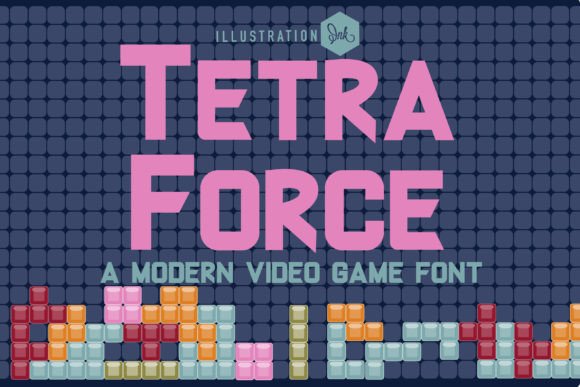
In a design landscape often crowded with delicate serifs and flowing scripts, finding a typeface that commands attention without shouting is a genuine win. Tetra Force steps into this space as a bold, all-caps sans serif font with a distinct personality. It’s not just another geometric typeface; its construction carries a subtle, pixel-inspired edge, evoking the clean, confident interfaces of classic video games and modern digital dashboards. This isn’t a font for long-form body copy, but for the moments where clarity, impact, and a touch of tech-savvy cool are paramount.
Visual Character and Design DNA
At its core, Tetra Force is a study in purposeful geometry. The letterforms are built from strong, straight lines and confident curves, resulting in excellent legibility at both display and mid-range sizes. What sets it apart is its balanced uniformity—each character occupies a consistent visual weight, creating a rhythmic, almost modular feel when set in headlines or logos. The inclusion of a light version is a practical masterstroke. While the regular weight delivers powerful punch for logos and hero sections, the light variant offers a more refined, airy quality suitable for subheadlines or elegant overlay text, preventing the overall design from feeling too heavy.
The font’s personality is assertive, modern, and slightly technical. It doesn’t try to be whimsical or traditional. Instead, it communicates efficiency, innovation, and forward-thinking energy. This makes it an excellent display font for projects aiming to convey a sense of progress, reliability, or digital-first thinking. Think of it as the typographic equivalent of a well-designed user interface—functional, clear, and aesthetically considered.
Where Tetra Force Shines: Practical Applications
Understanding a font’s strengths is key to using it effectively. Tetra Force excels in environments where text needs to be seen and understood instantly. Its all-caps nature and clean geometry make it a powerhouse for logo design, especially for tech startups, gaming platforms, esports teams, fitness brands, or any company wanting to project a sharp, contemporary image. The bold weight locks down a brand’s name with authority, while the light weight can be used for taglines or descriptive elements.
In web design and digital interfaces, this sans serif font is a natural fit for navigation menus, call-to-action buttons, section headers, and app interfaces. Its clarity reduces cognitive load, guiding the user’s eye efficiently. For social media graphics, Tetra Force cuts through the noise. A bold headline set in Tetra Force paired with a simple background can stop the scroll, whether for announcing a product launch, a podcast episode, or a motivational quote.
Physical applications are equally strong. In packaging design, particularly for consumer electronics, sports equipment, or gourmet snacks with a modern edge, Tetra Force communicates product benefits with straightforward confidence. It’s also a robust choice for editorial design in magazines, lookbooks, or annual reports, where pull quotes and section headers need to add visual punch without distracting from accompanying serif font or script font body text.
Making It Work: Pairing, Hierarchy, and Readability
The true power of a premium font like Tetra Force is unlocked through thoughtful pairing. Because it is so distinctive and all-caps, it demands a complementary partner for longer text. A classic strategy is to pair it with a highly readable, neutral serif font for body copy. Think of Tetra Force for a chapter title and a font like Garamond or Lora for the paragraphs that follow. The contrast creates a clear visual hierarchy and balances the display font’s intensity.
For a fully modern, tech-oriented stack, pairing Tetra Force with a clean, open sans serif font like Open Sans or Inter for body text can create a cohesive, streamlined look. The key is to ensure sufficient contrast in weight and style so the two don’t compete. Avoid pairing it with another highly stylized display font or an ornate handwritten font, as this can lead to visual chaos.
When using Tetra Force, always prioritize readability. Test your designs at the actual size they’ll be viewed. Its all-caps style is best for short, impactful phrases. For any text longer than a headline, consider using its light weight sparingly or switching to a more conventional case style for the body copy. Consistency in its application—using it for all primary headings across a brand’s touchpoints—strengthens brand identity and builds recognition.
Integrating Tetra Force into Your Workflow
Before committing, evaluate the font against your project’s core message. Does your brand or project need to feel innovative, direct, and robust? If yes, Tetra Force is a strong candidate. If your brand voice is warm, traditional, or highly luxurious, it may not be the ideal primary typeface.
Test it rigorously. Mock up your logo, a website header, a social media post, and a business card. See how the commercial font behaves in context. Pay attention to the spacing (kerning and tracking) in your specific letter combinations, as all-caps settings often benefit from slight adjustments. Review all included styles and glyphs to ensure it has the character support you need, especially for multilingual projects.
Finally, ensure you have the correct commercial licensing for your intended use, whether for a client project, merchandise, or digital products. A font is a critical design asset, and using it within its license terms is professional and ethical.
Tetra Force isn’t a universal solution, but for the right project, it’s a formidable tool. It offers designers and creators a way to inject a dose of digital-age confidence and visual clarity into their work, making it a valuable addition to a well-curated typographic toolkit.