Hercules Pixel: A True 8-Bit Typeface for Modern Creators
Finding a font that genuinely captures the spirit of early video games without feeling like a cheap imitation is harder than it sounds. Many pixel fonts sacrifice legibility for style or feel overly generic. Hercules Pixel Font takes a different approach. It’s built from the ground up to honor the authentic chunky aesthetic of classic 8-bit typography while ensuring it functions reliably in today’s design landscape. This isn’t just a novelty; it’s a versatile premium font for anyone needing that specific retro punch.
The Authentic 8-Bit Aesthetic
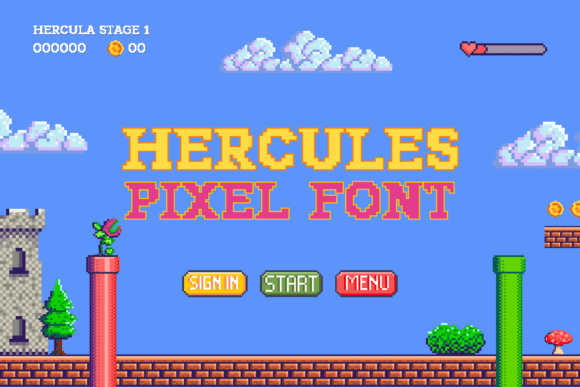
Hercules Pixel is a display font defined by its authentic pixel construction. Each character is meticulously crafted on a grid, resulting in the blocky, confident letterforms that defined the golden era of gaming. The personality is bold and distinctive, with a strong visual weight that commands attention. Unlike some retro fonts that can feel cramped or overly technical, Hercules maintains a surprising clarity. The spacing and character design ensure that words remain readable even at smaller sizes, a common challenge with pixel-based typefaces. Its appeal lies in its ability to trigger immediate nostalgia while feeling purposeful and designed.
Where This Retro Font Truly Shines
The strength of Hercules Pixel lies in its versatility across projects where a modern sans serif font or serif font would feel out of place. It’s a natural fit for game development, serving perfectly for in-game menus, dialogue boxes, and title screens. For streamers and content creators, it brings instant character to overlays, alerts, and on-screen graphics. Its utility extends into brand identity for businesses tapping into retro culture, from indie game studios to themed cafes or retro-tech blogs.
Beyond gaming, it’s an effective creative font for editorial design in niche magazines, packaging design for novelty products, and social media graphics that need to stand out in a feed. It can add a layer of authenticity to educational content about technology history or digital art. While it’s not intended for long body text, it excels in headlines, logos, and short bursts of impactful text where its personality can be fully appreciated.
Making Design Choices with Impact
Choosing a font like Hercules Pixel is about more than just liking its look; it’s about strategic alignment. This typeface directly influences brand perception, immediately signaling a connection to retro gaming, tech nostalgia, or a playful, innovative spirit. It creates instant recognition and can define a project’s entire visual hierarchy. For a logo design or a key headline, it provides that bold anchor point.
However, its strength is also its main consideration. Its strong personality means it needs to be used with intention. Pairing it thoughtfully is key. It often works well alongside a clean, neutral sans serif font for body copy, creating a balanced contrast that lets the pixel font command the spotlight without overwhelming the viewer. Testing font pairings in context is crucial—see how Hercules interacts with your color palette and layout.
When evaluating if it’s the right fit, consider your audience. For a project targeting gamers or a demographic that grew up with arcade cabinets and early consoles, the connection is immediate and powerful. For a more general audience, it can still work if the retro theme is a core part of the message. Always check the included character sets; Hercules supports multiple languages and includes functional symbols, which is vital for professional use.
Finally, understanding the commercial font licensing is a practical necessity. Ensure the license covers your intended use, whether for a client’s website, merchandise, or broadcast media. A quality font like this is a valuable design asset, and proper licensing protects your work and supports the creators who build these tools. Hercules Pixel isn’t just another pixel font—it’s a carefully engineered piece of modern typography that bridges a beloved past with contemporary design needs.